GANYMEDE, THREE YEARS AGO
The hands on the flight controls are shaking.
Not fear — vibration. There's a difference. The shuttle has been vibrating for four minutes, which is three minutes and forty seconds longer than anyone expected. The hands keep moving. They press switches. They verify readings. They do what hands do when a man has flown seventeen missions and knows that panic is a secondary system failure looking for a host.
The primary failure is the engine.
The readout says NOMINAL. The engine does not feel nominal. The engine sounds like a millstone running dry, a deep, cyclic groan transmitted up through the frame, through the seats, through the fillings in a man's back molars. Not turbulence. Not a hiccup in the burn. Something structural, something the instruments haven't caught yet or have decided not to report.
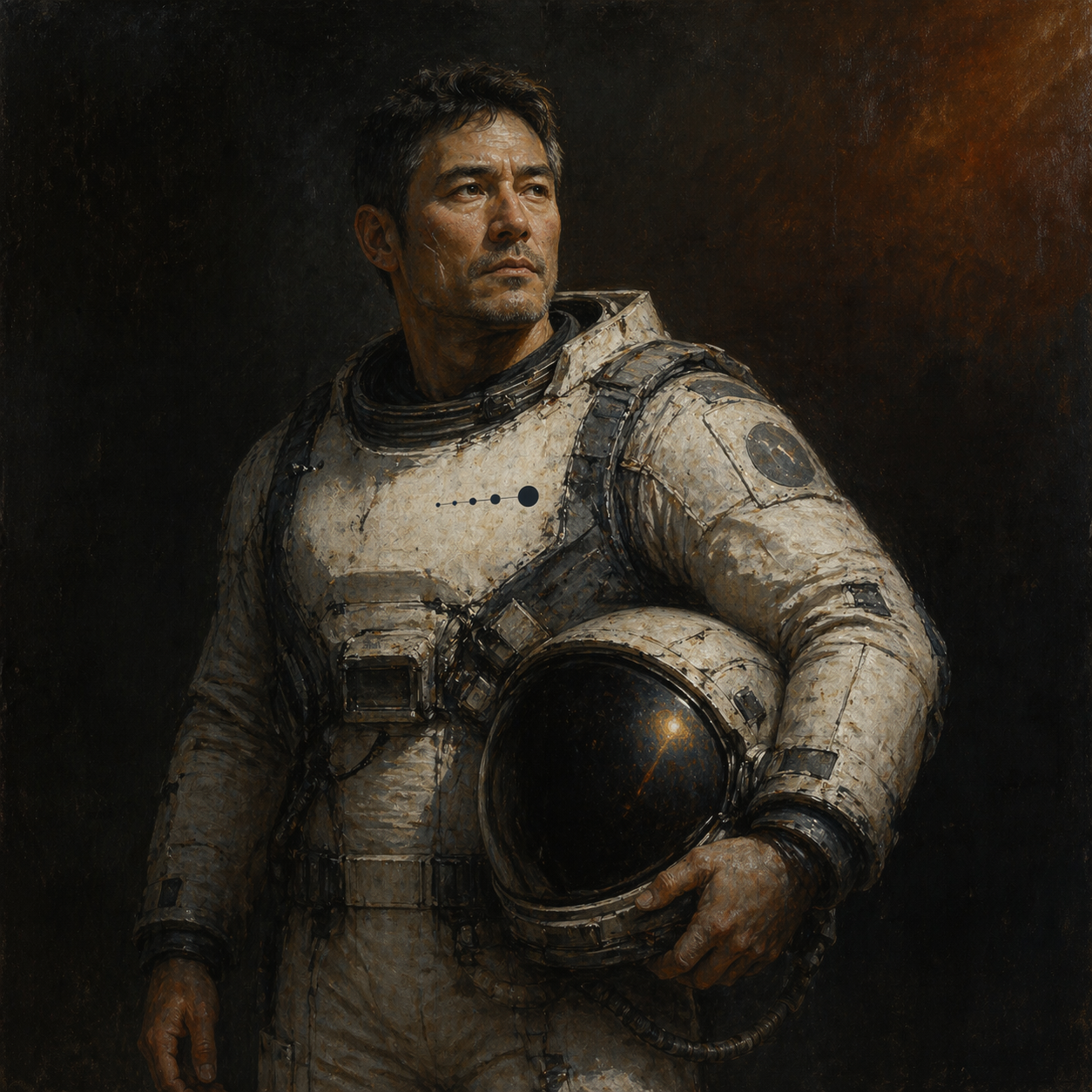
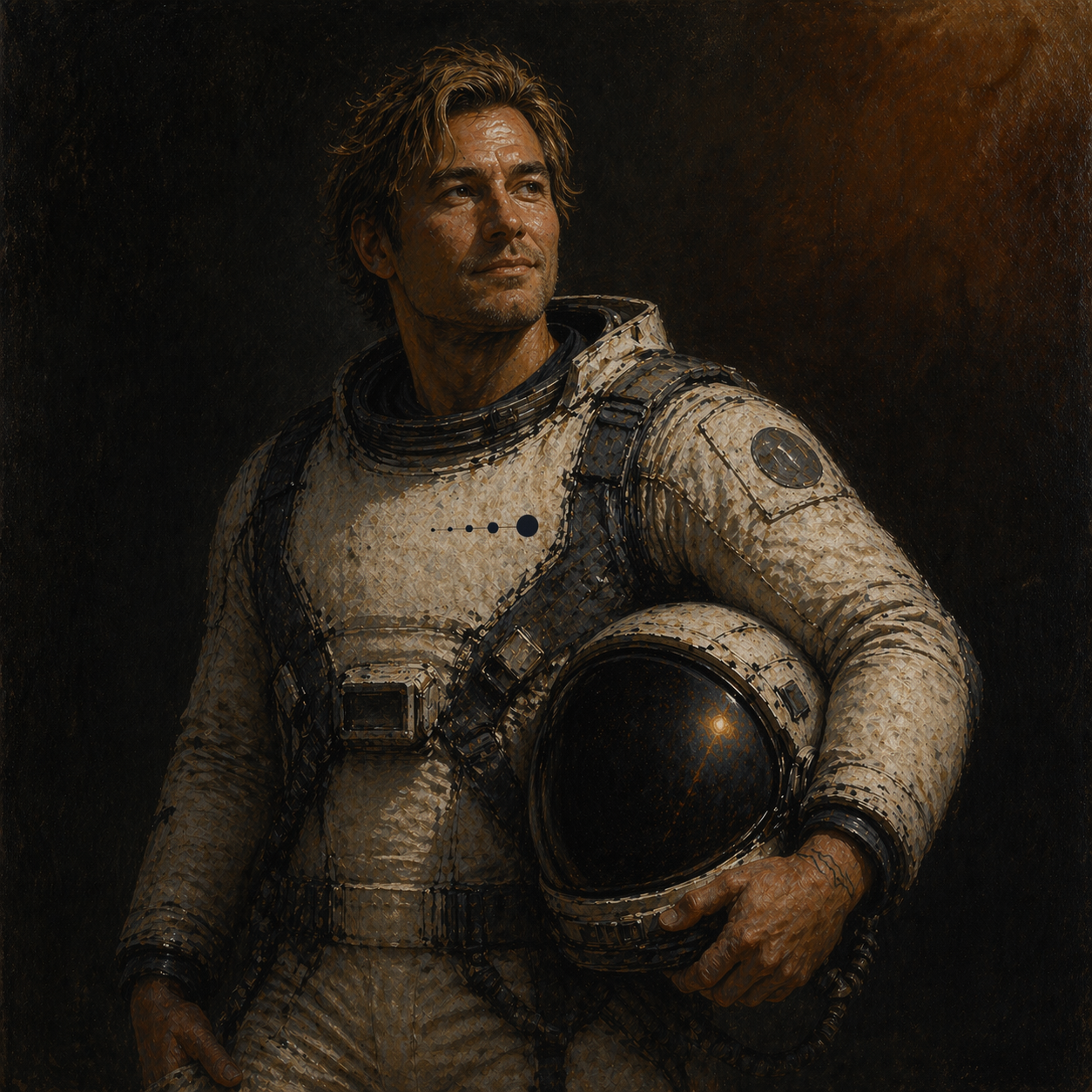
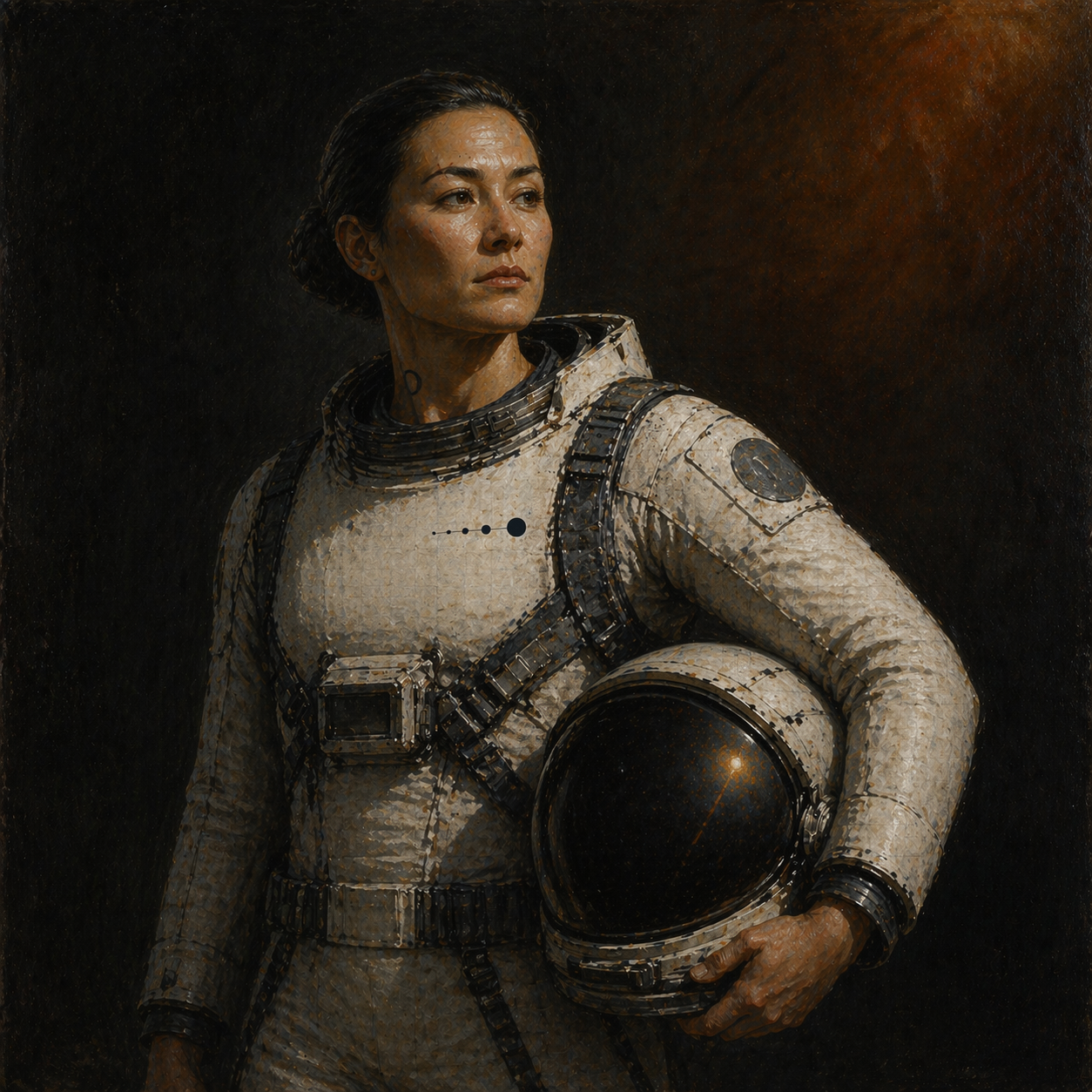
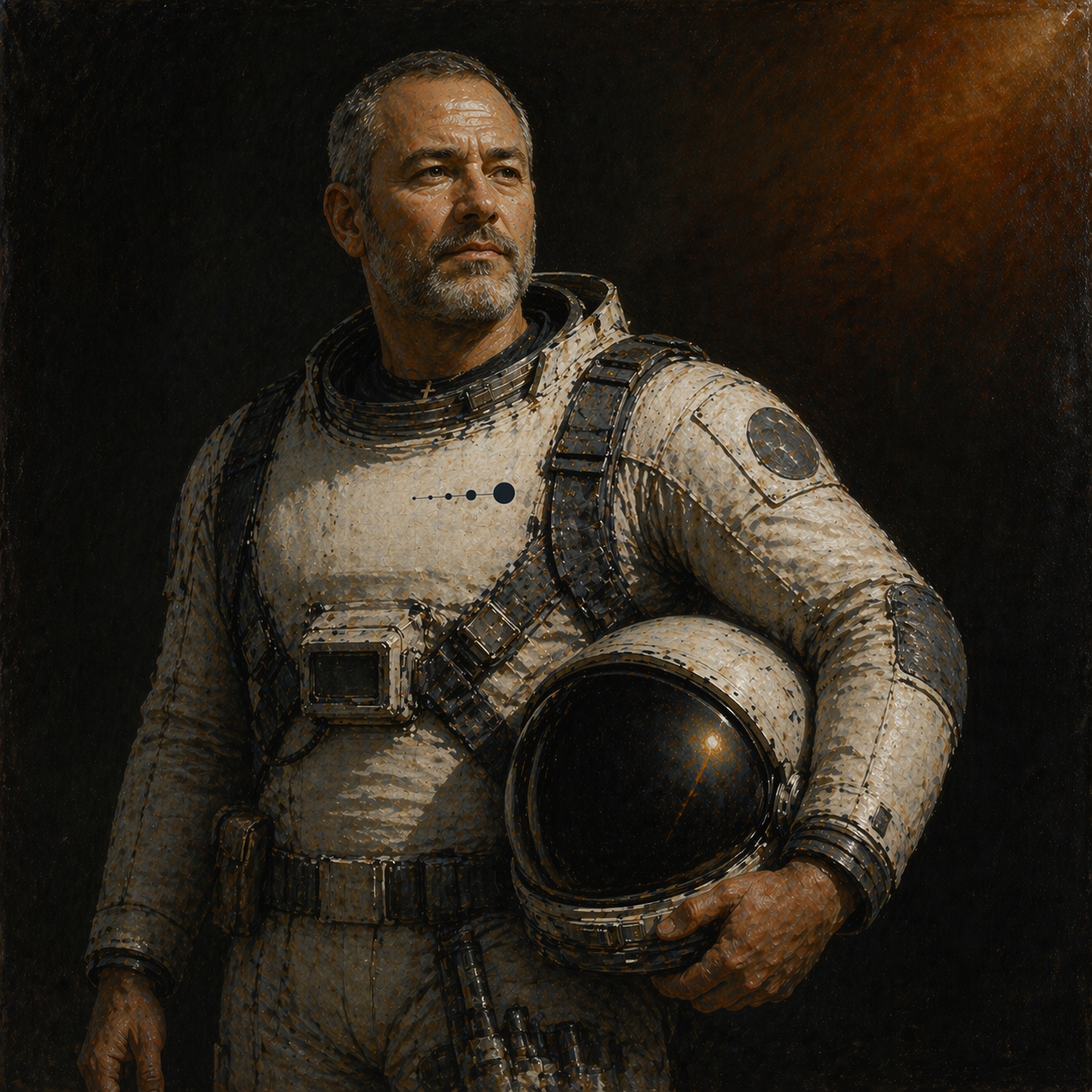
Four men in a shuttle built for six. One praying, lips moving, hands loose in his lap, eyes open, because closing them would mean admitting this is that kind of moment. One at the secondary console, cursing with the focused efficiency of a man inventorying options and finding them depleted. One at the primary controls. One at the viewport.
The one at the viewport has abandoned his console. Fuel system monitoring, that was his job. The fuel system is fine. Ganymede holds him.
It fills the lower half of the window — the ice pale amber-grey, the surface still, giving nothing back. Above it, Jupiter. Banded, enormous, close enough that the eye rejects the scale. They have been above this ice for eleven days. Nine of those days a drill worked the surface below, boring down through the first stratum toward the subsurface ocean, a column of void, four billion years sealed, getting longer by eleven meters each hour. Three more days here, then home. Beside one console, a customs declaration form sits half-filled on a tablet, the destination field reading REYKJAVIK.
The engine's groan climbs a half-step in pitch.
The man at the controls runs the restart sequence for the third time. RESTART FAILED. He enters the override. OVERRIDE NOT ACKNOWLEDGED. He enters the manual code. Waits.
The one who was cursing has stopped.
The vibration changes. A subtler frequency beneath the grinding, high and thin, a pressure behind the eyes rather than in the ears. The man at the viewport turns from Ganymede.
Nobody speaks.
The engine fires.
Wrong direction.
The shuttle yaws fifteen degrees before the inertial dampers catch it, and they don't fully catch it — the nose swings and pulls, and a man not strapped in correctly hits the bulkhead shoulder-first, and something tears in the walls — not the impact, not the yaw, deeper than that. A fracture propagating at the speed of metal failure, a sound that inhabits the chest cavity and arrives from everywhere at once, a sound that belongs in a cathedral organ and not in a shuttle frame. The viewport splinters from the lower left corner, a white fracture line spreading toward the seal.
White light floods in.
Not an explosion. An explosion has a concussive wave, a point of origin, a direction. This is a structural failure propagating faster than the eye can follow. The shuttle tears at the midsection joint. The two halves peel apart the way a bone breaks.
One moment the air is screaming. Then it isn't there.
The man at the viewport goes first — through the breach before it is fully open, the window frame catching his shoulder, spinning him out toward the ice below. One arm extends. Reaches. The fingers spread. The man with empty hands goes next, his lips still moving. The man at the secondary console catches a handhold — fingers lock, knuckles white — holds for two seconds, three. Then his hands open, and he is gone.
The man at the primary controls keeps working. The sequence completes. The response window expires. His hands move anyway.
Pale amber-grey. Still. Giving nothing away.
Black.